

A Working Intercom From Antique Telephones
Although it can be hard to imagine in today’s semiconductor-powered, digital world, there was electrical technology around before the widespread adoption of the transistor in the latter half of the 1900s that could do more than provide lighting. People figured out clever ways to send information around analog systems, whether that was a telegraph or a telephone. These systems are almost completely obsolete these days thanks to digital technology, leaving a large number of rotary phones and other communications systems relegated to the dustbin of history. [Attoparsec] brought a few of these old machines back to life anyway, setting up a local intercom system with technology faithful to this pre-digital era.
These phones date well before the rotary phone that some of us may be familiar with, to a time where landline phones had batteries installed in them to provide current to the analog voice circuit. A transformer isolated the DC out of the line and amplified the voice signal. A generator was included in parallel which, when operated by hand, could ring the other phones on the line. The challenge to this build was keeping everything period-appropriate, with a few compromises made for the batteries which are D-cell batteries with a recreation case. [Attoparsec] even found cloth wiring meant for guitars to keep the insides looking like they’re still 100 years old. Beyond that, a few plastic parts needed to be fabricated to make sure the circuit was working properly, but for a relatively simple machine the repairs were relatively straightforward.
The other key to getting an intercom set up in a house is exterior to the phones themselves. There needs to be some sort of wiring connecting the phones, and [Attoparsec] had a number of existing phone wiring options already available in his house. He only needed to run a few extra wires to get the phones located in his preferred spots. After everything is hooked up, the phones work just as they would have when they were new, although their actual utility is limited by the availability of things like smartphones. But, if you have enough of these antiques, you can always build your own analog phone network from the ground up to support them all.
youtube.com/embed/mkJmT9kiu30?…

Upcycling an iPad into a Touchscreen Display for your PC
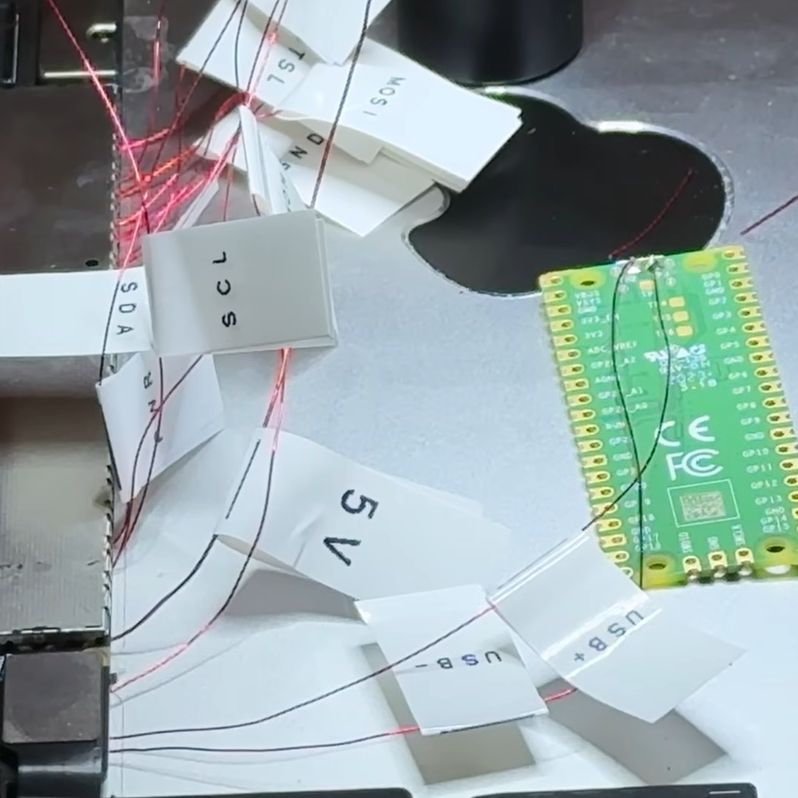
Although generally iPads tend to keep their resale value, there are a few exceptions, such as when you find yourself burdened with iCloud-locked devices. Instead of tossing these out as e-waste, you can still give them a new, arguably better purpose in life: an external display, with touchscreen functionality if you’re persistent enough. Basically someone like [Tucker Osman], who spent the past months on making the touchscreen functionality play nice in Windows and Linux.
While newer iPads are easy enough to upcycle as an external display as they use eDP (embedded Display Port), the touch controller relies on a number of chips that normally are initialized and controlled by the CPU. Most of the time was thus spent on reverse-engineering this whole process, though rather than a full-depth reverse-engineering, instead the initialization data stream was recorded and played back.
This thus requires that the iPad can still boot into iOS, but as demonstrated in the video it’s good enough to turn iCloud-locked e-waste into a multi-touch display. The SPI data stream that would normally go to the iPad’s SoC is instead intercepted by a Raspberry Pi Pico board which pretends to be a USB HID peripheral to the PC.
If you feel like giving it a short yourself, there’s the GitHub repository with details.
Thanks to [come2] for the tip.
youtube.com/embed/3t8xT-2vBE0?…

Converting AC Irrigation Valves To DC Operation
Due to historical engineering decisions made many decades ago, a great many irrigation systems rely on solenoid valves that operate on 24 volts AC. This can be inconvenient if you’re trying to integrate those valves with a modern smart home control system. [Johan] had read that there were ways to convert these valves to more convenient DC operation, and dived into the task himself.
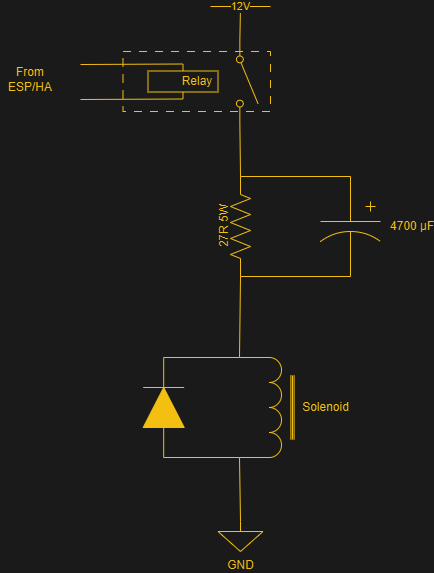
The workaround involves wiring up a current limiting resistor with a large capacitor in parallel. When firing 12 volts down the line to a solenoid valve, the resistor acts as a current limiter, while the parallel cap is initially a short circuit. This allows a high current initially, that slowly tails off to the limited value as the capacitor reaches full charge. This ensures the solenoid valve switches hard as required, but keeps the current level lower over the long term to avoid overheating. According to [Johan], this allows running 24V AC solenoid valves with a 12V DC supply and some simple off-the-shelf relay boards.
We’ve seen similar work before, which was applied to great effect. Sometimes doing a little hack work on your own can net you great hardware to work with. If you’ve found your own way to irrigate your garden as cheaply and effectively as possible, don’t hesitate to notify the tipsline!


Substack breach impacted 663,000 accounts, but appears to be a scrape of public data... so not a big deal at all
haveibeenpwned.com/Breach/Subs…

Have I Been Pwned: Substack Data Breach
In October 2025, the publishing platform Substack suffered a data breach that was subsequently circulated more widely in February 2026.Have I Been Pwned
reshared this
Lorenzo reshared this.
Questo sito web utilizza cookie tecnici e di sessione. Proseguendo la navigazione su questo sito, accetti l'utilizzo dei cookie.