
Motorola’s Password Pill Was Just One Idea
Let’s face it; remembering a bunch of passwords is the pits, and it’s just getting worse as time goes on. These days, you really ought to have a securely-generated key-smash password for everything. And at that point you need a password manager, but you still have to remember the password for that.
Well, Motorola is sympathetic to this problem, or at least they were in 2013 when they came up with the password pill. Motorola Mobility, who were owned by Google at the time, debuted it at the All Things Digital D11 tech conference in California. This was a future that hasn’t come to pass, for better or worse, but it was a fun thought experiment in near-futurism.
Dancing with DARPA
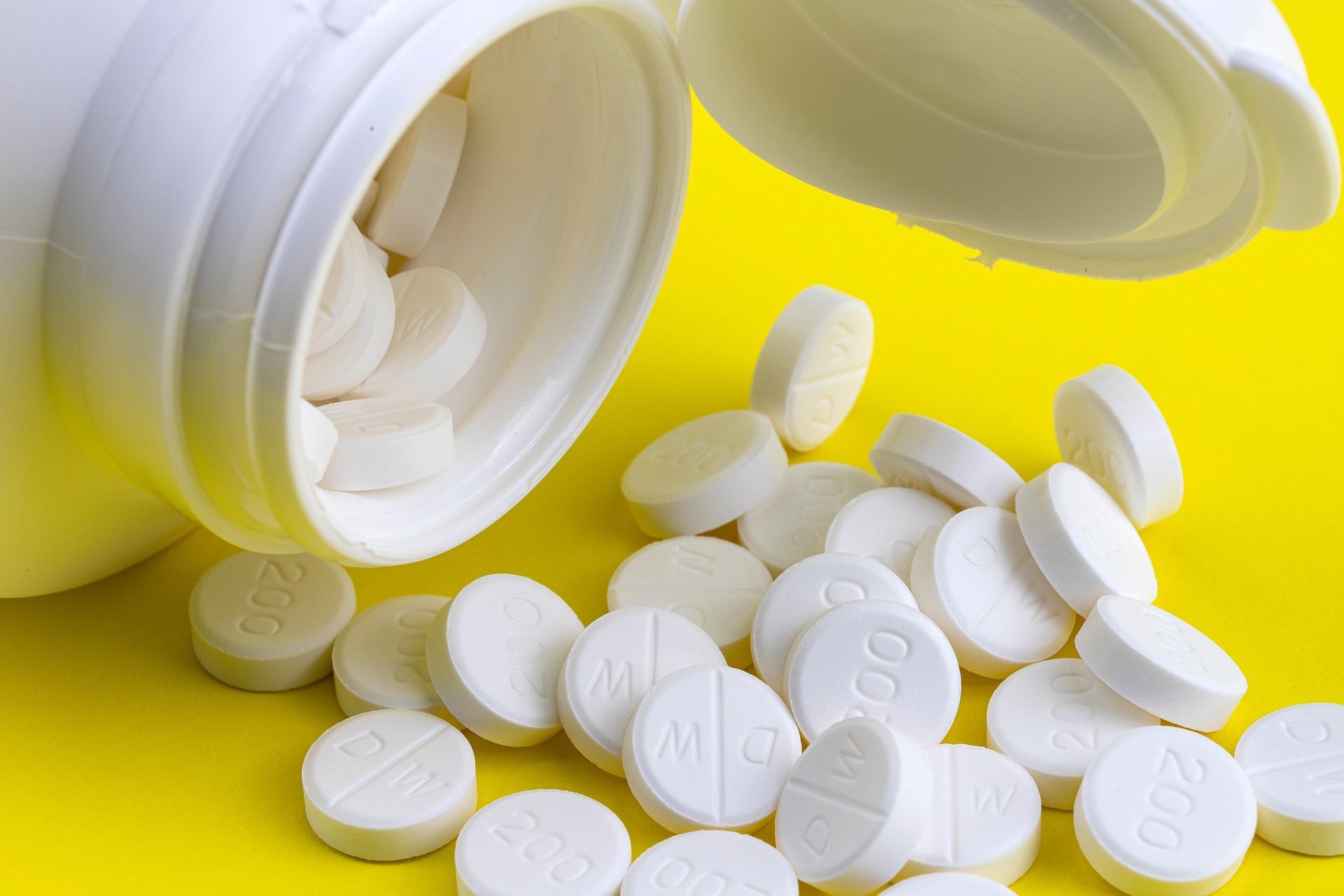
Back then, such bleeding-edge research was headed by former DARPA chief Regina Dugan. At the conference, Dugan stated that she was “working to fix the mechanical mismatch between humans and electronics” by doing things such as partnering with companies that “make authentication more human”.Image by HeungSoon from Pixabay
Along with Proteus Digital Health, Dugan et. al created a pill with a small chip inside of it and a switch. Once swallowed, your various stomach acids serve as the electrolyte. The acids power the chip, and the switch goes on and off, creating an 18-bit ECG-like signal.
Basically, your entire body becomes an authentication token. Unlock your phone, your car door handle, and turn on your computer, just by existing near them.
It should be noted that Proteus already had FDA clearance for a medical device consisting of an ingestible sensor. The idea behind those is that medical staff can track when a patient has taken a pill based on the radio signal. Dugan said at the conference that it would be medically safe to ingest up to thirty of these pills per day for the rest of your life. Oh yeah, and she says the only thing that the pill exposes about the taker is whether they took it or not.
Motorola head Dennis Woodside stated that they had demonstrated this authentication technology working and authenticating a phone. While Motorola never intended to ship this pill, it was based on the Proteus device with FDA clearance, presumably so they could test it safely.
The story of Proteus Digital Health is beyond us here, but for whatever reason, their smart pills never took off. So we’re left to speculate about the impact on society that this past future of popping password pills would have had.
About That Government Influence
Redford and Poitier in Sneakers (1992). Image via IMDb
While it sounds sorta cool at first, it also seems like something a government might choose to force on a person sooner or later. Someone they wanted to insert behind enemy lines, perhaps, or just create an inside job that otherwise wouldn’t have happened.
Taking off my tin foil hat for a moment, I’ll compare this pill with existing modern biometrics. A face scan, a fingerprint, or even my voice is my passport, verify me are all momentary actions.
With these, you’re more or less in control of when authentication happens. A pill, on the other hand, must run its course. You can’t change the signal mid-digestive cycle. Plus, you’d have to guard your pills with your life, and if a couple pills pass through you every day, you’d better have a big pillbox.
Authentication Can Be Skin Deep
Image by MC10 via Slashgear
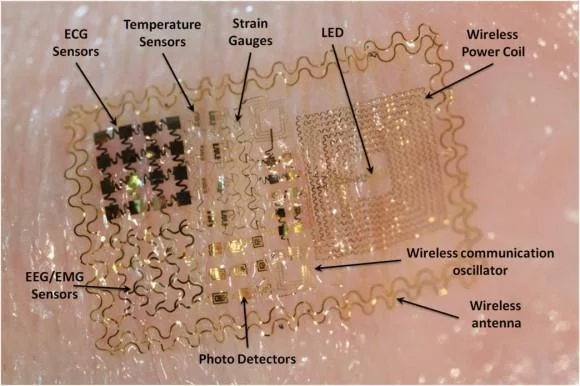
So the password pill never came to pass, but it’s worth mentioning that at the same conference, Dugan debuted another method of physical authentication — a temporary password tattoo they developed along with MC10, a company that makes stretchable circuits and has since been acquired by a company called Medidata.
More typically, their circuits are used to do things like concussion detection for sports, or baby thermometers that continuously track temperature.
Dugan said that the key MC10 technology is in the accordion-like structures connecting the islands of inflexible silicon. These structures can stretch up to 200% and still work just fine. The tattoos are waterproof, so go ahead and swim or shower. Of course, the password tattoo never came to be, either. And that’s just fine with me.
Vintage Film Editor Becomes HDMI Monitor
With the convenience of digital cameras and editing software, shooting video today is so easy. But fifty years ago it wasn’t electronics that stored the picture but film, and for many that meant Super 8. Editing Super 8 involved a razor blade and glue, and an editing station, like a small projector and screen, was an essential accessory. Today these are a relatively useless curio, so [Endpoint101] picked one up for not a lot and converted it into an HDMI monitor.
Inside these devices there’s a film transport mechanism and a projection path usually folded with a couple of mirrors. In this case the glass screen and much of the internals have been removed, and an appropriate LCD screen fitted. It’s USB powered, and incorporates a plug-in USB power supply mounted in a UK trailing socket for which there’s plenty of space.
There’s always some discussion whenever a vintage device like this is torn apart as to whether that’s appropriate. These film editors really are ten a penny though, so even those of us who are 8 mm enthusiasts can see beyond this one. The result is a pleasingly retro monitor, which if we’re honest we could find space for ourselves. The full video is below the break. Meanwhile it’s not the first conversion we’ve seen, here’s another Hanimex packing a Raspberry Pi.
youtube.com/embed/YTQoNQL0R9E?…
RE: mastodon.social/@campuscodi/11…
No official report out yet, but users are reporting that Facebook and Instagram are now down too in Russia
Russia has permanently blocked YouTube yesterday and WhatsApp todayДомен WhatsApp пропал из DNS-сервера Роскомнадзора
Домены мессенджера WhatsApp (whatsapp.com и web.whatsapp.com) удалены из реестра Национальной системы доменных имен (НСДИ) Роскомнадзора. Это привело к ограничению доступа к сервису в России, который теперь возможен только через VPN. Домен whatsapp.Коммерсантъ (Лента новостей (Москва))
reshared this
Cybersecurity & cyberwarfare reshared this.
Chrome 145 is out
This is the formal launch of Device Bound Session Credentials in Chrome, a feature that tries to prevent infostealers from taking your cookies
developer.chrome.com/release-n…
Chrome 145 | Release notes | Chrome for Developers
Column wrapping for multicol, Device Bound Session Credentials, and more.Chrome for Developers
reshared this
Lorenzo reshared this.
Questo sito web utilizza cookie tecnici e di sessione. Proseguendo la navigazione su questo sito, accetti l'utilizzo dei cookie.